Flexible power cable is easy to underestimate. On paper, it can look like a simple order. A buyer needs a certain gauge, a certain conductor count, a certain voltage rating, and a certain length. Done.
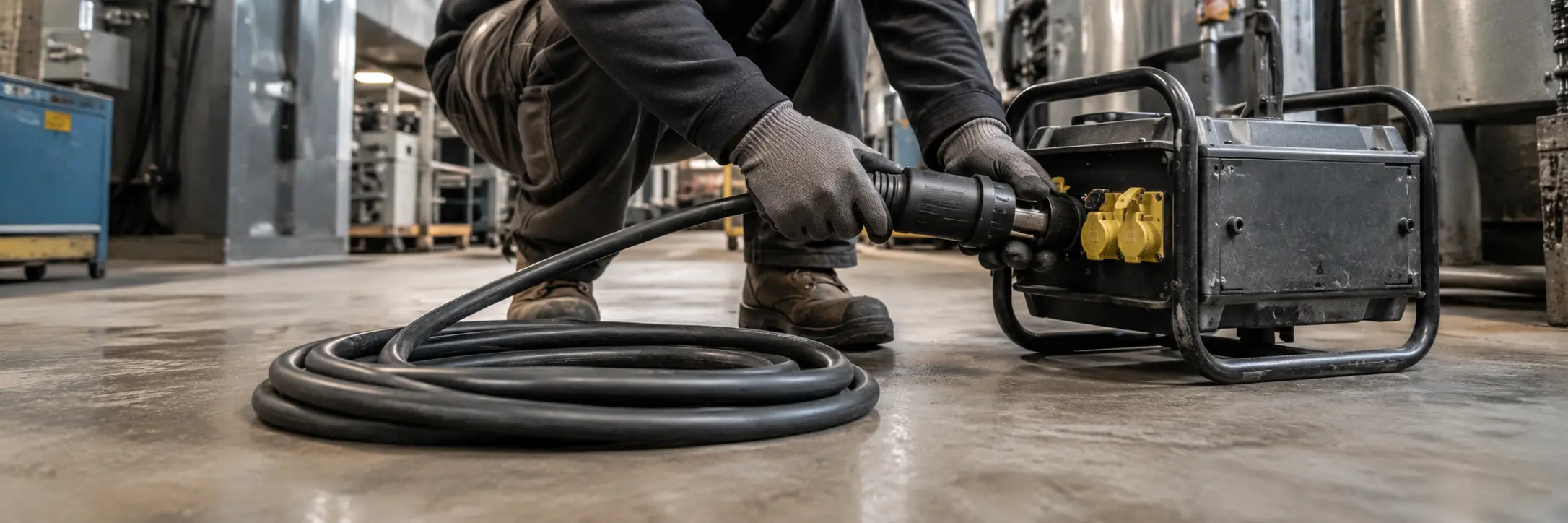
But in the field, the cable does not live on paper. It gets dragged across concrete. It gets pulled around equipment. It may sit near oil, moisture, heat, vibration, tools, pallets, lifts, generators, motors, and machinery that does not care how neatly the spec was written.
That is where the difference between a cable that fits and a cable that survives starts to matter. For utilities, data centers, electrical distributors, maintenance teams, and industrial buyers, flexible power cable is often part of the work that keeps equipment moving. It may not be the most visible part of a system, but when it fails, the delay is hard to ignore.
Flexible Cable Is Often Treated Like a Small Detail
A lot of cable conversations start with the basics.
- What size do you need?
- How many conductors?
- What voltage?
- How many feet?
Those details matter. They are the starting point. But they are not the whole story.
A cord that technically matches the plug or equipment can still be the wrong fit for the job if it cannot handle the environment. A cable used in a clean indoor space has a very different life than one used around portable equipment, construction activity, temporary power, shop floors, utility work, or outdoor service conditions.
The problem is not always that someone ordered the wrong cable. Sometimes they ordered the cable as if it would stay clean, dry, still, and protected. Then the real world got involved.
What “Survive the Job” Really Means
For flexible power cable, survival is about more than turning equipment on. It may need to bend repeatedly. It may need to resist oil, water, abrasion, and rough handling. It may need to remain flexible in changing temperatures. It may need to support temporary power or portable equipment without becoming the weak point in the setup.
This is why portable cord types such as SOOW cable are used so often in demanding environments. SOOW is commonly selected for flexible power applications where durability, movement, moisture resistance, and oil resistance are part of the requirement. That does not mean every job needs the same cord. It means buyers should think about how the cable will actually be used after it leaves the shelf.
- Will it be moved every day?
- Will it be handled by crews wearing gloves?
- Will it be near oil, water, or outdoor conditions?
- Will it be connected to tools, motors, equipment, or temporary power?
- Will it be stored, uncoiled, dragged, and recoiled again?
Those questions can matter just as much as the electrical details.
Why This Matters for Utilities
Utility environments are rarely gentle on cable. Crews may need flexible power connections for temporary setups, equipment, maintenance, field work, repair operations, and support systems. Cable may be handled quickly, moved between locations, exposed to moisture, or used near heavy equipment.
In these environments, the cost of failure is not just the cost of replacing the cable. It is the time spent locating a replacement, confirming the specification, waiting on availability, and getting the work moving again.
That is why flexible cable should be selected with the work environment in mind. A cable that survives handling, exposure, and movement can help reduce avoidable interruptions.
Why Data Centers Should Care About Portable Power Cable
Data centers are often associated with permanent power systems, structured cabling, fiber, tray cable, backup power, and carefully managed infrastructure.
But temporary and flexible power still has a place. During maintenance, equipment changes, commissioning, testing, service work, backup planning, or facility upgrades, teams may need reliable flexible power connections. A data center environment may be clean and controlled, but the expectations are high. Downtime is expensive. Delays are noticed. Materials need to match the job.
A flexible power cable used in or around a critical facility should not be treated as an afterthought. Even when it supports temporary work, the cable still needs to be appropriate for the equipment, load, location, and handling conditions. In other words, temporary does not mean unimportant.
Why Electrical Distributors Hear About Problems First
Electrical distributors often get the urgent call. A customer needs portable cord today. A maintenance team needs a replacement. A contractor needs a length that was missed in the original order. A facility needs something that can handle the application better than what failed.
In those moments, the question is not just “Do you have cable?” It is “Do you have the right cable?” That is where clear specifications make a difference. If a customer only asks for “cord,” there is room for confusion. If they can provide the cord type, AWG size, conductor count, voltage rating, length, equipment use, and environmental conditions, the distributor has a much better chance of matching the need quickly.
For distributors, SOOW, SJOOW, portable cord, welding cable, and related flexible cable products often support customers who cannot afford a long delay. Stocking and sourcing decisions become easier when the application is clear.
The Hidden Cost of Using the Wrong Flexible Cable
The wrong cable does not always fail immediately. Sometimes it works long enough to seem fine. Then the jacket starts to show wear. Flexing creates stress. Oil or moisture becomes a problem. The cable becomes stiff, cracked, damaged, or unreliable. The issue shows up later, usually when the equipment is needed. That is the frustrating part.
A poor fit may not be obvious when the cable is first installed or connected. It shows up after the cable has been used the way the job actually requires it to be used.
That can lead to replacement costs, downtime, troubleshooting, job delays, safety concerns, and repeat ordering. For a busy facility or contractor, that is not a small inconvenience.
SOOW Cable Is Often Chosen for Tougher Flexible Power Applications
SOOW cable is a common choice when flexible power cable needs to support demanding conditions. It is generally associated with heavy-duty portable power use, oil-resistant insulation, an oil-resistant jacket, and water-resistant construction.
It is often used with portable equipment, tools, motors, machinery, temporary power, construction sites, industrial equipment, generators, and maintenance applications.
The appeal is practical. SOOW cable gives buyers a flexible cord option that can handle more than a light-duty indoor connection. When the job includes movement, handling, moisture, oil, or rougher use, that matters.
Still, SOOW is not something to order by name alone. Buyers still need to confirm size, conductor count, length, voltage, load, and environmental requirements.
Fit the Equipment, Then Fit the Environment
The best cable order starts with the equipment, but it should not stop there.
A buyer needs to know what the cable is powering, how much current is required, what voltage rating is needed, how many conductors are required, and how long the cable run will be. Then comes the second layer.
Where will it be used? How often will it move? Will it be exposed to oil, water, sunlight, abrasion, or temperature changes? Will it be used indoors, outdoors, temporarily, or around heavy equipment? That second layer is where many ordering mistakes happen. The cable may fit the equipment, but not the job.
When to Ask More Before Ordering
If the cable is only used in a protected indoor environment, selection may be straightforward. But if the application involves movement, outdoor exposure, equipment changes, temporary power, industrial machinery, or repeated handling, it is worth slowing down before ordering.
The most useful details to confirm are the cord type, AWG size, number of conductors, voltage rating, length, amperage or equipment load, jacket requirements, and whether the cable needs resistance to oil, water, abrasion, or other environmental factors.
This does not have to make the buying process complicated. It just helps prevent the wrong cable from being quoted, shipped, installed, or returned. For utilities, data centers, and electrical distributors, that kind of clarity can save time.
Flexible Power Cable Should Be Ready for the Reality of the Work
There is a reason durable flexible cable is used in jobs where the environment is not predictable. A cable may start in a warehouse, ship to a distributor, land on a jobsite, get pulled across a floor, connect to equipment, sit near oil or moisture, and get moved again the next day. It may support temporary power, tools, motors, maintenance work, or portable equipment.
The cable has to do more than meet the order line. It has to survive the job.
Custom Cable Corp. supplies SOOW cable, portable cord, welding cable, and power cable for industrial, commercial, utility, data center, construction, and equipment applications where the right construction matters. When the application involves movement, handling, temporary power, or demanding conditions, choosing the right flexible cable can help reduce delays and keep work moving.
FAQs About Flexible Power Cable and SOOW Cable
Flexible power cable is important because many industrial and utility applications involve equipment that moves, gets serviced, changes location, or needs temporary power. In these settings, the cable may be exposed to handling, abrasion, oil, water, outdoor conditions, or repeated flexing. A cable that is not built for those conditions may wear faster, create delays, or need replacement sooner than expected.
No. SOOW cable is often used for temporary power, but it is also used for portable equipment, tools, motors, machinery, generators, industrial maintenance, and other flexible power applications. The deciding factor is not whether the use is temporary or permanent. The key question is whether the cord construction matches the equipment, voltage, load, movement, and environment.
When quoting SOOW cable, an electrical distributor should ask for the AWG size, number of conductors, voltage rating, required length, equipment type, amperage or load, usage environment, and any required approvals or project specifications. It also helps to know whether the cable will be used indoors, outdoors, near oil or water, on a jobsite, with portable equipment, or in a repeated-flexing application.
SOOW cable may be used in some data center-related applications, especially for maintenance, temporary power, testing, service work, generators, or portable equipment. The correct cable depends on the equipment being powered, voltage and load requirements, installation location, safety requirements, and facility specifications. For critical environments, the cable should always match the approved application and project requirements.
Flexible power cable is designed for applications where movement, handling, portability, or equipment connection may be required. Standard building wire is typically used in fixed wiring applications and is not usually intended for repeated movement or portable equipment connections. The right choice depends on whether the cable will be fixed in place or exposed to flexing, handling, temporary use, or equipment movement.