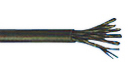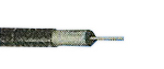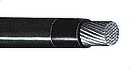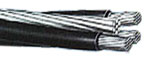
Our inventory covers virtually every electrical and electronic cable application imaginable. We maintain over 15,000 active SKUs, each engineered for performance, consistency, and compliance with UL, CSA, and RoHS standards. From heat-resistant wire to precision coaxial and multi-conductor control cable, we supply the materials that keep manufacturing, communications, and energy systems running 24/7.
At Custom Cable Corp., every product line is backed by the same principle: deliver the best wire for the job and stand behind it. We combine deep industry knowledge with supply-chain efficiency to help clients meet tight schedules without compromising quality.
Our inventory covers virtually every electrical and electronic cable application imaginable. We maintain over 15,000 active SKUs, each engineered for performance, consistency, and compliance with UL, CSA, and RoHS standards. From heat-resistant wire to precision coaxial and multi-conductor control cable, we supply the materials that keep manufacturing, communications, and energy systems running 24/7.
Browse our full range of wire and cable products by category. Each product is clearly specified to help you quickly identify the right solution for your application.
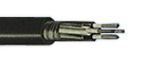
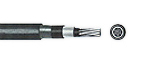
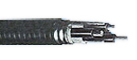
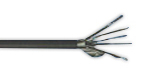
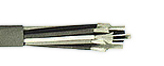
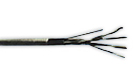
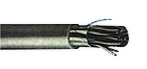
NVN-THHN tray cable is a compact multi-conductor control cable designed for installations where space, routing flexibility and dependable 600-volt performance are important. Its small overall diameter can make it easier to work with in crowded trays, conduit and equipment pathways, while the range of available conductor counts gives engineers and contractors flexibility when configuring control circuits for industrial machinery and other electrical systems. Browse our complete range of control cable solutions for additional constructions, ratings, and application requirements.
Showing 1–9 of 49 results

Description:
| Item # | Item Name | Size (AWG/MCM) | No. of Conductors | Strands | Nominal Insulation Thickness (inches) | Nominal Thickness Nylon (inches) | Nominal Jacket Thickness (inches) | Nominal O.D. (inches) | Nominal Weight (LBS/MFT) | No conductors | RFQ |
| 12002 | NVN-THHN Tray Cable (Unshielded) Thermosetting Jacket, 600V, UL LISTED 90°C DRY 75°C WET | 16 | 2 | 19/0.0117 | 0.015 | 0.005 | 0.045 | 0.300 | 52 | 2 | Request a Quote |
| 12003 | NVN-THHN Tray Cable (Unshielded) Thermosetting Jacket, 600V, UL LISTED 90°C DRY 75°C WET | 16 | 3 | 19/0.0117 | 0.015 | 0.005 | 0.045 | 0.315 | 63 | 3 | Request a Quote |
| 12004 | NVN-THHN Tray Cable (Unshielded) Thermosetting Jacket, 600V, UL LISTED 90°C DRY 75°C WET | 16 | 4 | 19/0.0117 | 0.015 | 0.005 | 0.045 | 0.345 | 79 | 4 | Request a Quote |
| 12005 | NVN-THHN Tray Cable (Unshielded) Thermosetting Jacket, 600V, UL LISTED 90°C DRY 75°C WET | 16 | 5 | 19/0.0117 | 0.015 | 0.005 | 0.045 | 0.370 | 91 | 5 | Request a Quote |
| 12006 | NVN-THHN Tray Cable (Unshielded) Thermosetting Jacket, 600V, UL LISTED 90°C DRY 75°C WET | 16 | 6 | 19/0.0117 | 0.015 | 0.005 | 0.045 | 0.400 | 106 | 6 | Request a Quote |
| 12007 | NVN-THHN Tray Cable (Unshielded) Thermosetting Jacket, 600V, UL LISTED 90°C DRY 75°C WET | 16 | 7 | 19/0.0117 | 0.015 | 0.005 | 0.045 | 0.400 | 115 | 7 | Request a Quote |
| 12008 | NVN-THHN Tray Cable (Unshielded) Thermosetting Jacket, 600V, UL LISTED 90°C DRY 75°C WET | 16 | 8 | 19/0.0117 | 0.015 | 0.005 | 0.045 | 0.435 | 132 | 8 | Request a Quote |
| 12009 | NVN-THHN Tray Cable (Unshielded) Thermosetting Jacket, 600V, UL LISTED 90°C DRY 75°C WET | 16 | 9 | 19/0.0117 | 0.015 | 0.005 | 0.045 | 0.465 | 147 | 9 | Request a Quote |
| 12010 | NVN-THHN Tray Cable (Unshielded) Thermosetting Jacket, 600V, UL LISTED 90°C DRY 75°C WET | 16 | 10 | 19/0.0117 | 0.015 | 0.005 | 0.045 | 0.505 | 162 | 10 | Request a Quote |
Construction
Description:
Color Code:
Features:
Applications:
Typical Applications:
A smaller cable diameter can make routing easier when tray, conduit or equipment space is limited.
Cable diameter affects how many cables can fit within a raceway or tray and how easily the cable can be routed around equipment. In installations with high conductor counts or crowded pathways, a compact cable construction can help reduce congestion. The final selection should still account for fill requirements, bend limitations and the dimensions of the specific cable being considered.
The conductor count should be based on the number of control functions and circuits required by the equipment.
The electrical schematic should identify each conductor needed for controls, interlocks, signaling and other circuit functions. Available conductor counts can then be compared with the project requirements. Allowance for future expansion may also be considered when appropriate, but the cable should ultimately match the system design and applicable electrical requirements.
A thermosetting jacket can be useful where the cable may be exposed to demanding temperatures, chemicals or physical conditions.
Unlike materials that soften repeatedly when heated, thermosetting compounds retain their cured structure. In industrial environments, that can contribute to stable jacket performance under heat and mechanical stress. The specific cable specification should always be reviewed to confirm suitability for the expected temperature, chemical exposure and installation conditions.
Yes, a multi-conductor cable can consolidate several compatible control circuits into one cable assembly.
Using multiple conductors within one cable can simplify routing between control panels, machinery and other equipment. Whether particular circuits can share the same cable depends on voltage, circuit function, electrical noise concerns and applicable code requirements. The system designer should determine which circuits can be grouped together safely and effectively.
Compare conductor size and count, voltage rating, temperature rating, outside diameter and installation requirements.
A replacement should not be selected by conductor count alone. Differences in cable diameter, insulation system, jacket material, environmental ratings and physical construction can affect how well the cable fits the existing installation. Reviewing the original specification or equipment documentation can help identify a replacement that matches both the electrical and mechanical requirements.
Interested in cooperation or have questions? Just fill out the form and we will call you back. Or you can contact us via: info@gmail.com