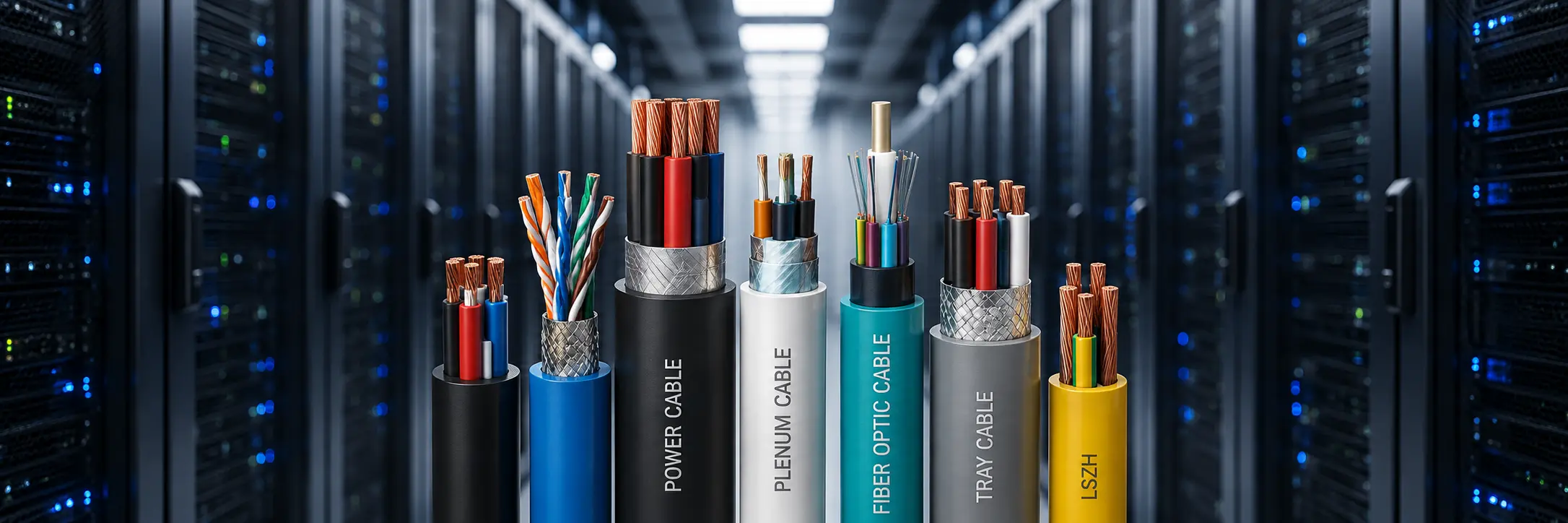
Control cable is one of those products that sounds simple until you actually have to order it.
You may know the equipment it needs to connect. You may know the voltage. You may even know the conductor count. But once you start looking at shielded, unshielded, Type TC, tray cable, festoon cable, pendant cable, reel cable, THHN, XHHW, TFFN, EPR, CPE, and direct burial options, the decision can get more complicated.
That is because control cable is not one single cable. It is a broad category used across industrial, commercial, utility, automation, and equipment wiring applications.
The right control cable depends on what the cable is doing, where it is being installed, and what conditions it will face once it is in service.
What Is Control Cable?
Control cable is used to carry control signals or power between equipment, control panels, machinery, switches, relays, sensors, pendant stations, cranes, hoists, conveyors, and automation systems.
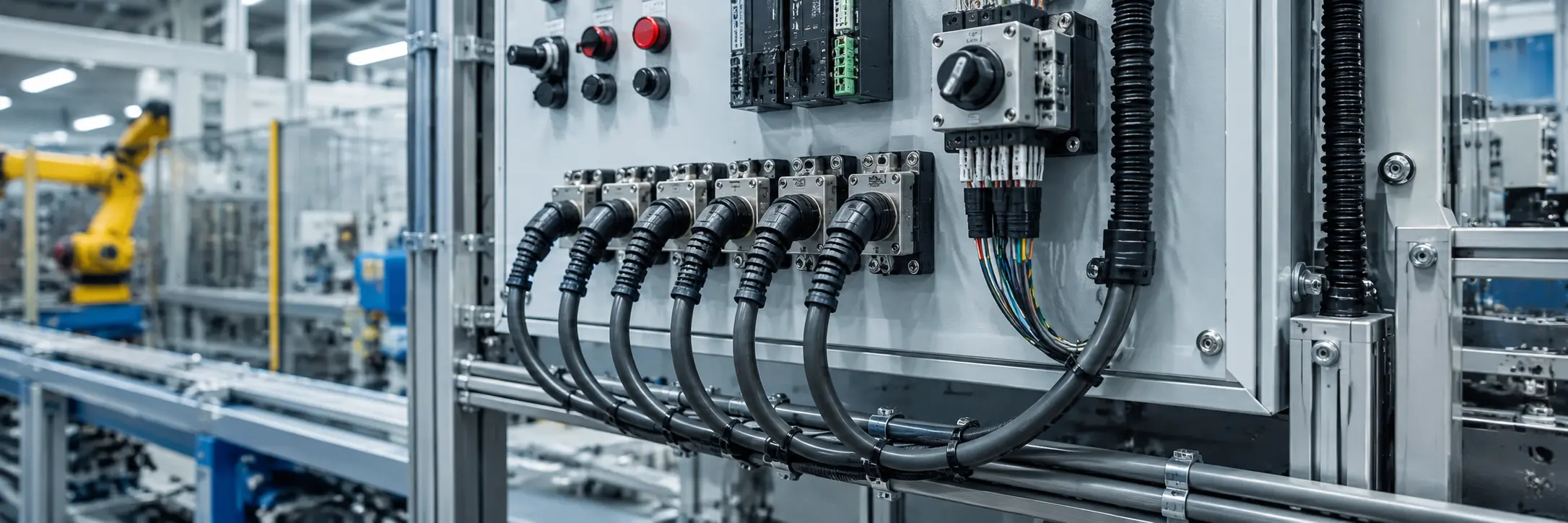
In many industrial environments, control cable helps equipment communicate, start, stop, move, measure, signal, or respond. It may be used in a control panel, along a production line, inside a manufacturing plant, on a crane system, or between pieces of machinery that need reliable control wiring.
Some control cable are used for low-voltage signal circuits. Some are used in 600V power and control applications. Some are designed for flexing or movement. Some are designed for cable trays, conduits, raceways, wet locations, dry locations, direct burial, or demanding industrial environments.
That is why the term “control cable” should always be matched with the actual application.
What Is Control Cable Used For?
Control cable is commonly used in industrial equipment and building systems where electrical signals or control circuits need to move between devices.
Common applications include automation equipment, conveyor systems, cranes, hoists, pendant stations, control panels, motor controls, relay circuits, processing equipment, cable reels, festoon systems, machine tools, and manufacturing machinery.
In simple terms, if a system needs cable to send commands, carry signals, support control functions, or connect moving equipment to a control point, control cable may be part of the design.
It is especially common in industrial settings where durability matters. A cable in a clean indoor control cabinet faces a very different environment than a cable used on a crane, hoist, or outdoor cable reel.
Control Cable vs. Power Cable
Control cable and power cable are related, but they are not always interchangeable.
Power cable is mainly used to deliver electrical power to motors, panels, machinery, distribution systems, and other powered equipment. Control cable is used for control circuits, signaling, switching, automation, relays, and equipment commands.
There is overlap. Some industrial cables are designed for both power and control applications. For example, certain tray cable constructions may be used for power, control, lighting, and signal circuits depending on the cable type and installation requirements.
The important thing is not just the name of the cable. It is the full specification.
A purchasing team or contractor may need to confirm the voltage rating, conductor size, conductor count, insulation, jacket, shielding, flexibility, environmental rating, and installation method before choosing the right cable.
What Is Type TC Control Cable?
Type TC control cable is tray cable designed for approved cable tray and industrial wiring applications. It is often used in commercial and industrial environments where cable needs to run through trays, raceways, conduits, ducts, troughs, wireways, or equipment pathways.
Type TC cable may be used for control, power, signal, lighting, relay, and telemetering applications depending on the construction and specification.
This is one reason Type TC cable appears so often in industrial projects. It can support a range of wiring needs, but it still has to match the job. A shielded Type TC cable may be selected for signal-sensitive control circuits, while an unshielded Type TC cable may be appropriate for other power or control applications.
Shielded vs. Unshielded Control Cable
One of the biggest decisions is whether the control cable should be shielded or unshielded.
Shielded control cable includes a shielding layer that helps protect signal quality when electrical noise or interference may be present. This can matter in facilities with motors, drives, power circuits, machinery, automation equipment, lighting systems, or other electrical sources nearby.
Unshielded control cable may be suitable when interference is less of a concern.
For example, a control circuit located near variable frequency drives or heavy machinery may need shielding to help protect signal reliability. A simpler control application in a lower-noise environment may not need the same construction.
The best choice depends on the equipment, signal type, cable run, installation environment, and project specification.
Control Cable for Moving Equipment
Not all control cable sits still.
Some applications require cable that moves, bends, retracts, or flexes during operation. This is common with cranes, hoists, pendant stations, festoon systems, transfer vehicles, power tracks, cable reels, and portable control systems.
In these applications, flexibility and jacket durability become very important. The cable may need to handle repeated movement, abrasion, oil, moisture, sunlight, or outdoor exposure.
Flat festoon cable, pendant cable, and reel cable are examples of control cable types used where movement is part of the application. These cables are selected not just for electrical performance, but also for mechanical performance.
A cable that works well in a stationary tray may not be the right cable for a constantly moving crane or reel system.
Indoor, Outdoor, Wet Location, and Direct Burial Requirements
The installation environment matters just as much as the equipment.
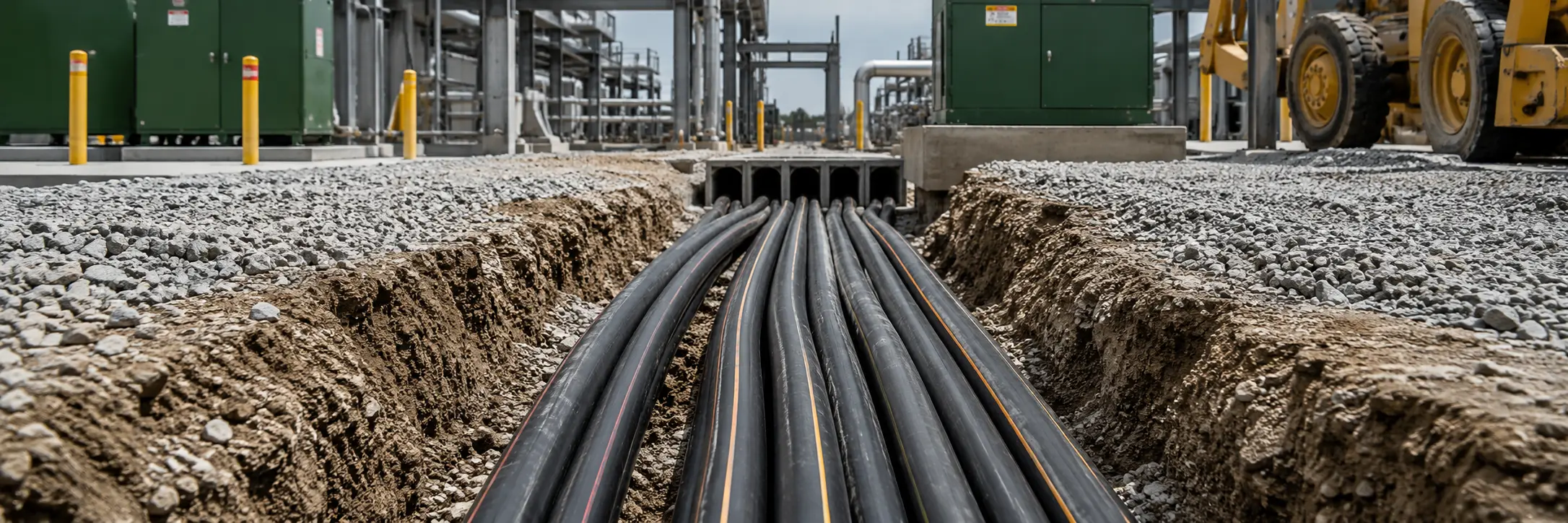
Some control cable are designed for dry indoor locations. Some can be used in wet locations. Some are sunlight resistant. Some can be used outdoors. Some are suitable for direct burial when the specific construction allows it.
This is where mistakes can happen. Two control cables may look similar on paper, but one may be designed for a protected indoor raceway while another may be built for wet, outdoor, or direct burial use.
Before ordering, it helps to confirm where the cable will be installed. Will it be in a tray, conduit, raceway, duct, wireway, or free air with support? Will it be exposed to oil, sunlight, water, abrasion, chemicals, flexing, or temperature changes?
Those details can change the cable recommendation.
How to Choose the Right Control Cable
The best way to choose control cable is to start with the application instead of the product name.
What equipment is being connected? Is the cable carrying control signals, power, or both? Is the cable stationary or moving? Will it be installed indoors or outdoors? Does the project require shielded cable? Is the cable going into a tray, raceway, conduit, direct burial, or a flexing application?
From there, confirm the technical requirements.
Important details include voltage rating, conductor size, conductor count, insulation type, jacket material, shielding, grounding, flexibility, temperature rating, approvals, and environmental conditions.
For quote requests, it helps to provide as much of this information as possible. A request for “control cable” is a starting point. A request for 600V shielded Type TC control cable with a specific conductor count, jacket, and installation environment is much easier to match correctly.
Control Cable for Industrial and Commercial Projects
Control cable plays an important role in industrial systems, automation equipment, material handling, manufacturing, utilities, transportation, and commercial electrical projects.
Custom Cable Corp. supplies control cable for industrial equipment, automation systems, cranes, hoists, pendant stations, cable reels, festoon systems, conveyor equipment, control panels, and power and control circuits. Available options include shielded, unshielded, multi-conductor, Type TC, THHN, TFFN, XHHW-2, FR-EPR/CPE, neoprene flat festoon, PVC flat festoon, pendant and reel, and UL 1277 tray cable options.
The right cable depends on the project, the installation, and the equipment it needs to support.
FAQs About Control Cable
Control cable is cable used to carry control signals or power between equipment, control panels, machinery, relays, switches, sensors, cranes, hoists, conveyors, and automation systems. It is commonly used in industrial and commercial environments where equipment needs reliable control wiring.
Control cable is used for automation systems, control panels, pendant stations, cranes, hoists, conveyors, cable reels, festoon systems, relay circuits, motor controls, machine tools, and industrial equipment. It helps equipment send commands, carry signals, and support control functions.
Control cable is typically used for control circuits, signals, switching, automation, relays, and equipment commands. Power cable is mainly used to deliver electrical power to motors, panels, machinery, and distribution systems. Some industrial cables can support both power and control applications depending on the construction and rating.
Shielded control cable should be used when control circuits may be exposed to electrical noise or interference from motors, drives, power circuits, machinery, or other electrical equipment. Shielding can help protect signal quality in control, automation, relay, instrumentation, and communication circuits.
To choose the right control cable, confirm the application, voltage rating, conductor size, conductor count, shielding requirement, insulation type, jacket material, flexibility need, temperature rating, and installation method. It also helps to know whether the cable will be used indoors, outdoors, in a tray, in conduit, in a wet location, for direct burial, or in a moving equipment application.