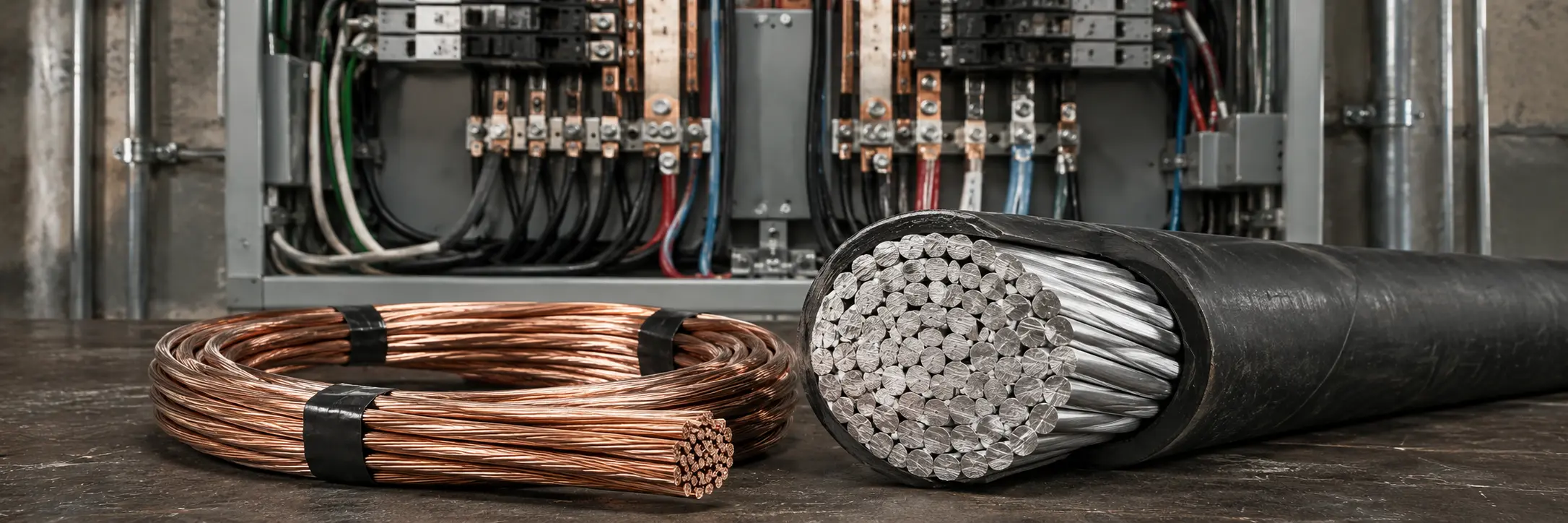
Choosing between copper and aluminum conductors comes down to cost, weight, and the electrical performance you need. This short, practical guide explains the main differences, gives a clear rule of thumb for sizing, and shows the common applications for each material.
Copper vs aluminum at a glance
Conductivity and sizing: Aluminum conductors have roughly 60 to 63 percent of copper’s conductivity by cross sectional area, so aluminum must be upsized to carry the same current. A common practical rule is to go up about two AWG sizes for aluminum to match copper ampacity.
Cost and weight
Aluminum is lighter and usually less expensive per pound than copper. For very large feeders, overhead lines, and long runs where weight matters, aluminum often gives the best cost per amp despite the need to use a larger cross section. Custom Cable Corp. stocks a range of aluminum products, including ACSR, SE, and URD types.
Performance, voltage drop, and a practical example
Because aluminum has higher resistance per foot, voltage drop becomes a bigger factor for long runs unless you increase conductor size. For example, standard practice for a 200 amp residential service is commonly 2/0 AWG copper or 4/0 AWG aluminum to meet ampacity requirements and code allowances. Always confirm final sizing with NEC tables and your local authority.
Terminations, durability, and safety
Aluminum expands and contracts more with temperature changes and forms an oxide layer that can make connections less reliable if not handled properly. Modern aluminum alloys and approved connectors, plus correct torque and installation practice, reduce historical problems, but you must use terminations and devices rated for aluminum or for both copper and aluminum. For a technical review of connection issues and modern mitigation practices, see the Connectability Counts report.
When to choose copper
Use copper when space is limited, when you need higher ampacity in a smaller conductor, or where long-term reliability at terminations is critical. Copper is common for branch circuits, control wiring, and many flexible or compact cable assemblies. We offer bare copper and weather resistant copper products.
When to choose aluminum
Choose aluminum for large feeders, service entrance conductors, overhead distribution, and situations where weight and material cost are the dominant constraints. Aluminum feeders are standard for many utility and commercial applications.
Quick decision checklist
- Run length and voltage drop: long runs favor copper unless you upsize aluminum.
- Space and conduit fill: if space is tight, prefer copper.
- Budget and weight: for very large conductors or overhead lines, aluminum is usually more economical.
How Custom Cable Corp. can help
Custom Cable Corp. stocks both copper and aluminum cable, and we can help with specifications, quotes, and custom assemblies. Explore our Aluminum Cable category our Bare Copper and Weather Proof Wire category, or the ACSR aluminum conductor product page.
Frequently Asked Questions
Copper provides higher conductivity and more ampacity in a smaller diameter, making it preferred for branch circuits, control wiring, and where space or termination reliability matters. Aluminum is a good choice for large feeders and overhead lines when weight and cost are priorities.
A useful rule of thumb is to upsize aluminum by about two AWG sizes to match copper ampacity, but final sizing must use NEC ampacity tables and account for insulation type, ambient temperature, and voltage drop.
Yes. A common practice is 2/0 AWG copper or 4/0 AWG aluminum for 200 amp residential service conductors, subject to NEC rules, device ratings, and local authority approval. Confirm with code tables for your installation.
Modern alloys and approved connectors reduce many historical issues, but correct termination hardware, installation torque, and devices listed for aluminum are essential. For guidance, see technical testing on aluminum and copper connections.
We sell both materials.
Aluminum Cable
Bare Copper and Weather Proof Wire
Contact us for quotes and specification help.