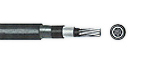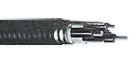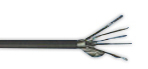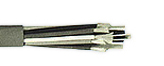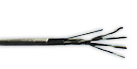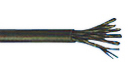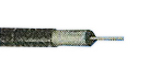
Our inventory covers virtually every electrical and electronic cable application imaginable. We maintain over 15,000 active SKUs, each engineered for performance, consistency, and compliance with UL, CSA, and RoHS standards. From heat-resistant wire to precision coaxial and multi-conductor control cable, we supply the materials that keep manufacturing, communications, and energy systems running 24/7.
At Custom Wire & Cable, every product line is backed by the same principle: deliver the best wire for the job and stand behind it. We combine deep industry knowledge with supply-chain efficiency to help clients meet tight schedules without compromising quality.
Our inventory covers virtually every electrical and electronic cable application imaginable. We maintain over 15,000 active SKUs, each engineered for performance, consistency, and compliance with UL, CSA, and RoHS standards. From heat-resistant wire to precision coaxial and multi-conductor control cable, we supply the materials that keep manufacturing, communications, and energy systems running 24/7.
Browse our full range of wire and cable products by category. Each product is clearly specified to help you quickly identify the right solution for your application.
Showing all 3 results
Array ( )
| Item # | Item Name | Size (AWG/MCM) | Insulation Core (inches) | Shield coverage | Nominal O.D. (inches) | Nominal Capacitance (pF/ft) | Velocity of propagation | Nominal Impedance (ohms) | Nominal Weight (LBS/MFT) | RFQ |
| 8541RU2582150V 60C | Twinaxial Cable | 20 AWG(7/28)Tinned Copper | Solid Polyethylene Clear/Blue0.022 | 100% Alum.+57% Tinned Copper Braid | Blue PVC0.242 | 19.7 | 66 % | 78 | 38 | Request a Quote |
| 8542RG 22 B/U | Twinaxial Cable | 18 AWG(7/0.0152)1 Tinned1 Bare | Solid Polyethylene0.285 | 96% Double Tinned Copper Braid | Black Non-Contaminating PVC0.420 | 16.0 | 66 % | 95 | 127 | Request a Quote |
| 8544RU2498300V 80C | Twinaxial Cable | 20 AWG(7/28)1 Tinned1 Bare | Solid Polyethylene0.022 | 100% Alum./Mylar+90% Tinned Copper Braid | Black PVC0.330 | 15.5 | 66 % | 100 | 69 | Request a Quote |
For broadcast and computer applications.
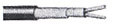
Twinaxial cable contains two insulated conductors enclosed within a common shield. The two conductors typically carry balanced or differential signals, which can help reduce electrical noise and improve signal integrity.
Coaxial cable usually has one center conductor surrounded by insulation and an outer shield. Twinaxial cable is often preferred for data, control, instrumentation and electronic communication systems that require a two-conductor transmission path. The correct choice depends on the equipment design, required impedance, transmission speed and installation environment.
Twinaxial cable is commonly used in data communications, industrial control systems, instrumentation, computer equipment and other electronic systems that transmit balanced signals. It can also be used in legacy networking systems, military equipment and specialized machine connections.
Its shielded, two-conductor construction makes it useful in environments where electromagnetic interference could affect signal quality. However, twinaxial cables are not universally interchangeable. The cable’s impedance, conductor size, voltage rating and shielding must match the requirements of the equipment and application.
Impedance affects how electrical signals travel through the cable. For reliable performance, the cable impedance should match the transmitting equipment, receiving equipment and termination components used in the system.
Using the wrong impedance can cause signal reflections, waveform distortion, communication errors or reduced transmission distance. Common twinaxial cable constructions may have impedance ratings such as 78, 95 or 100 ohms. Always confirm the equipment manufacturer’s specifications before selecting a replacement or designing a new installation.
Shielding protects the conductors from electromagnetic interference and helps prevent signals within the cable from affecting nearby equipment. Twinaxial cable may use foil shielding, braided shielding or a combination of both.
Foil provides continuous coverage around the conductors, while braid adds mechanical strength, flexibility and a reliable grounding path. Double-braid constructions may provide additional durability and interference protection in demanding environments. The best shielding type depends on the operating frequency, surrounding electrical noise, cable movement and grounding requirements.
Important specifications include nominal impedance, conductor size, capacitance, voltage rating, temperature rating, shielding construction and overall cable diameter. Flexibility, bend radius, cable weight and compatibility with the required connectors should also be considered.
The installation environment is equally important. A cable used inside controlled electronic equipment may have different requirements than one installed near motors, machinery, heat or other sources of interference. Providing complete application details when requesting a quote helps ensure that the cable will be electrically compatible, physically suitable and compliant with any applicable standards.
Interested in cooperation or have questions? Just fill out the form and we will call you back. Or you can contact us via: info@gmail.com