Our inventory covers virtually every electrical and electronic cable application imaginable. We maintain over 15,000 active SKUs, each engineered for performance, consistency, and compliance with UL, CSA, and RoHS standards. From heat-resistant wire to precision coaxial and multi-conductor control cable, we supply the materials that keep manufacturing, communications, and energy systems running 24/7.
At Custom Wire & Cable, every product line is backed by the same principle: deliver the best wire for the job and stand behind it. We combine deep industry knowledge with supply-chain efficiency to help clients meet tight schedules without compromising quality.

Our inventory covers virtually every electrical and electronic cable application imaginable. We maintain over 15,000 active SKUs, each engineered for performance, consistency, and compliance with UL, CSA, and RoHS standards. From heat-resistant wire to precision coaxial and multi-conductor control cable, we supply the materials that keep manufacturing, communications, and energy systems running 24/7.
Browse our full range of wire and cable products by category. Each product is clearly specified to help you quickly identify the right solution for your application.
Fiber optic cable is often specified when a project needs high-speed signal transmission over longer distances, higher bandwidth, or cleaner performance than copper communication cable can provide. The right fiber construction depends on where the cable will run, how it will be protected, and whether the installation requires riser, plenum, indoor/outdoor, armored, unarmored, or direct burial cable. Use this category to narrow the cable type before comparing fiber count, jacket rating, installation environment, and project requirements.
Fiber optic cable is used to transmit data using light signals instead of electrical signals. It is commonly used for network backbones, data centers, telecommunications, broadband, security systems, industrial communication, building-to-building connections, and other applications that require high-speed or long-distance signal transmission.
The correct cable depends on the installation environment, fiber count, jacket rating, indoor or outdoor use, pathway, protection requirements, and project specification.
Indoor fiber optic cable is designed for protected building environments and may need riser or plenum ratings depending on the pathway. Outdoor fiber optic cable is designed for exterior environments where the cable may be exposed to moisture, temperature changes, sunlight, or underground conditions.
Indoor/outdoor fiber cable is used when a cable run moves between interior and exterior spaces or when the project requires one cable construction suitable for both parts of the pathway.
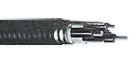
Armored fiber optic cable is used when the cable needs added mechanical protection. This may be important for direct burial, industrial facilities, utility pathways, outdoor runs, equipment areas, or installations where the cable could be exposed to crushing, rodents, abrasion, or physical damage.
The right armored fiber cable depends on whether the installation is indoor, outdoor, riser, plenum, direct burial, or placed in another protected or exposed pathway.
Direct burial fiber optic cable is designed for underground installation without needing to be placed inside conduit in every application, when the cable construction and project requirements allow it. It typically includes added protection against moisture, soil conditions, pressure, and physical damage.
Before ordering direct burial fiber, buyers should confirm the fiber count, armor requirement, jacket type, burial conditions, pathway, footage, and project specification.
To choose the right fiber optic cable, start with the route and environment. Confirm whether the cable will be installed indoors, outdoors, underground, in a riser pathway, in a plenum space, through conduit, in a tray, or between buildings. Then compare fiber count, fiber type, jacket rating, armor requirement, pulling conditions, distance, and required approvals.
For quote requests, provide the fiber count, indoor or outdoor requirement, armored or unarmored construction, riser or plenum rating, direct burial requirement, required footage, and any project specifications.
Interested in cooperation or have questions? Just fill out the form and we will call you back. Or you can contact us via: info@gmail.com