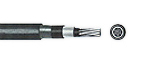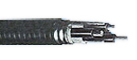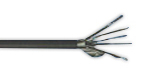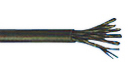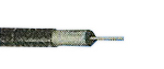
Our inventory covers virtually every electrical and electronic cable application imaginable. We maintain over 15,000 active SKUs, each engineered for performance, consistency, and compliance with UL, CSA, and RoHS standards. From heat-resistant wire to precision coaxial and multi-conductor control cable, we supply the materials that keep manufacturing, communications, and energy systems running 24/7.
At Custom Wire & Cable, every product line is backed by the same principle: deliver the best wire for the job and stand behind it. We combine deep industry knowledge with supply-chain efficiency to help clients meet tight schedules without compromising quality.
Our inventory covers virtually every electrical and electronic cable application imaginable. We maintain over 15,000 active SKUs, each engineered for performance, consistency, and compliance with UL, CSA, and RoHS standards. From heat-resistant wire to precision coaxial and multi-conductor control cable, we supply the materials that keep manufacturing, communications, and energy systems running 24/7.
Browse our full range of wire and cable products by category. Each product is clearly specified to help you quickly identify the right solution for your application.
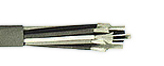
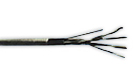
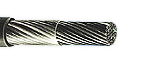
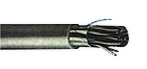
FR-EPR/CPE unshielded tray cable is a durable control and power cable option for industrial systems where flexibility, dependable insulation performance and resistance to demanding operating conditions are important. Its construction makes it well suited for equipment connections, process control, manufacturing systems and other installations where a rugged 600-volt tray cable is required without the added complexity of shielding.
Showing 10–18 of 31 results

Array ( )
| Item # | Item Name | Number Of Conductors | Conductor Size (AWG) | Conductor Strand | Nominal Cable O.D. (inches) | Net Weight (lbs/1000 Ft.) | RFQ |
| 99711 | FR-EPR/CPE - Unshielded 600 Volt, UL Type TC-ER (Approved as TYPE TC-ER for Exposed Run applications of 3 or more conductors as defined by NEC.) | 30 | 14 | 7/0.0242 | 1.03 | 747 | Request a Quote |
| 99720 | FR-EPR/CPE - Unshielded 600 Volt, UL Type TC-ER (Approved as TYPE TC-ER for Exposed Run applications of 3 or more conductors as defined by NEC.) | 37 | 14 | 7/0.0242 | 1.11 | 875 | Request a Quote |
| 99730 | FR-EPR/CPE - Unshielded 600 Volt, UL Type TC-ER (Approved as TYPE TC-ER for Exposed Run applications of 3 or more conductors as defined by NEC.) | 2 (Flat) | 12 | 7/0.0305 | 0.400 x 0.245 | 82 | Request a Quote |
| 99732 | FR-EPR/CPE - Unshielded 600 Volt, UL Type TC-ER (Approved as TYPE TC-ER for Exposed Run applications of 3 or more conductors as defined by NEC.) | 3+ (Ground) | 12 | 7/0.0305 | 0.41 | 148 | Request a Quote |
| 99733 | FR-EPR/CPE - Unshielded 600 Volt, UL Type TC-ER (Approved as TYPE TC-ER for Exposed Run applications of 3 or more conductors as defined by NEC.) | 3 | 12 | 7/0.0305 | 0.435 | 124 | Request a Quote |
| 99734 | FR-EPR/CPE - Unshielded 600 Volt, UL Type TC-ER (Approved as TYPE TC-ER for Exposed Run applications of 3 or more conductors as defined by NEC.) | 4 | 12 | 7/0.0305 | 0.475 | 157 | Request a Quote |
| 99735 | FR-EPR/CPE - Unshielded 600 Volt, UL Type TC-ER (Approved as TYPE TC-ER for Exposed Run applications of 3 or more conductors as defined by NEC.) | 5 | 12 | 7/0.0305 | 0.52 | 191 | Request a Quote |
| 99737 | FR-EPR/CPE - Unshielded 600 Volt, UL Type TC-ER (Approved as TYPE TC-ER for Exposed Run applications of 3 or more conductors as defined by NEC.) | 7 | 12 | 7/0.0305 | 0.595 | 268 | Request a Quote |
| 99739 | FR-EPR/CPE - Unshielded 600 Volt, UL Type TC-ER (Approved as TYPE TC-ER for Exposed Run applications of 3 or more conductors as defined by NEC.) | 9 | 12 | 7/0.0305 | 0.695 | 337 | Request a Quote |
FR-EPR/CPE - Unshielded 600 Volt, UL Type TC-ER (Approved as TYPE TC-ER for Exposed Run applications of 3 or more conductors as defined by NEC.)
Dimensions and weights are nominal; subject to industry tolerances.
Unshielded tray cable is typically appropriate when the circuit does not require protection from significant electromagnetic or radio-frequency interference.
In many industrial control and power applications, shielding is unnecessary when signal sensitivity is low, cable routing keeps conductors away from major interference sources, or the circuit is primarily carrying power rather than low-level instrumentation signals. Shielded cable may be preferable when cables run near variable-frequency drives, large motors, switching equipment or other sources of electrical noise.
FR-EPR refers to the flame-retardant ethylene propylene rubber insulation, while CPE refers to the chlorinated polyethylene outer jacket.
These materials are used because they provide a combination of electrical insulation, flexibility and physical durability suitable for demanding industrial environments. The exact performance characteristics of a cable should always be confirmed against its published specification when resistance to heat, chemicals, oils, moisture or other environmental conditions is critical to the installation.
Yes, it can be well suited for many industrial control applications that require a rugged multi-conductor cable.
Industrial control systems often need cables that can carry power or control signals between equipment, motors, controllers and other system components. The correct cable should be selected according to conductor count, conductor size, voltage, installation environment and any applicable code or equipment requirements.
Conductor count is determined by the number of circuits, signals or control functions the cable must support.
The electrical design should identify each required conductor, including any necessary control, power, neutral or grounding conductors. It is also worth considering whether future expansion could justify additional conductors, but conductor count should ultimately follow the system design and applicable electrical requirements rather than simply choosing the largest available configuration.
Provide the conductor size, number of conductors, required footage, voltage and any project-specific installation requirements.
Additional details such as tray installation, exposed-run requirements, environmental conditions and applicable specifications can help narrow the selection. Providing complete application information also makes it easier to confirm whether an unshielded FR-EPR/CPE cable is appropriate or whether another tray cable construction would be better suited to the project.
Interested in cooperation or have questions? Just fill out the form and we will call you back. Or you can contact us via: info@gmail.com