cable

Where Inventory Meets Expertise

Our inventory covers virtually every electrical and electronic cable application imaginable. We maintain over 15,000 active SKUs, each engineered for performance, consistency, and compliance with UL, CSA, and RoHS standards. From heat-resistant wire to precision coaxial and multi-conductor control cable, we supply the materials that keep manufacturing, communications, and energy systems running 24/7.

At Custom Wire & Cable, every product line is backed by the same principle: deliver the best wire for the job and stand behind it. We combine deep industry knowledge with supply-chain efficiency to help clients meet tight schedules without compromising quality.

Find the Products You Need Fast.

Our inventory covers virtually every electrical and electronic cable application imaginable. We maintain over 15,000 active SKUs, each engineered for performance, consistency, and compliance with UL, CSA, and RoHS standards. From heat-resistant wire to precision coaxial and multi-conductor control cable, we supply the materials that keep manufacturing, communications, and energy systems running 24/7.

Browse our full range of wire and cable products by category. Each product is clearly specified to help you quickly identify the right solution for your application.

Arc Welding Cable, 90°C 600V

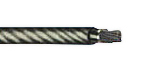
Arc welding cable provides the flexibility needed for secondary welding leads in demanding industrial environments. Proper sizing depends on welding amperage, duty cycle, and total circuit length, since longer runs can require a larger conductor to control voltage drop. Explore additional heavy-duty options in our mining cable category.

Showing 1–9 of 11 results

Search Part Number
Arc Welding Cable, 90°C 600V

Arc Welding Cable, 90°C 600V

Array
(
    [0] => Applications:
  • For connections from electrode holder and clamp to arc welder, bus welding box or transformers. Also useful in applications where high flexibility is desired. Not suitable for in-line voltage use or other power applications. Improper use could be hazardous to personnel and equipment
[1] => s:
  • For connections from electrode holder and clamp to arc welder, bus welding box or transformers. Also useful in applications where high flexibility is desired. Not suitable for in-line voltage use or other power applications. Improper use could be hazardous to personnel and equipment
[2] => )
Applications:
  • For connections from electrode holder and clamp to arc welder, bus welding box or transformers. Also useful in applications where high flexibility is desired. Not suitable for in-line voltage use or other power applications. Improper use could be hazardous to personnel and equipment

Item # Item Name Size (AWG/MCM) Strands Nominal O.D. (inches) Nominal Weight (LBS/MFT) RFQ
9350 Arc Welding Cable- 90°C 600V 6 260/30 0.380 130 Request a Quote
9351 Arc Welding Cable- 90°C 600V 4 374/30 0.410 190 Request a Quote
9353 Arc Welding Cable- 90°C 600V 2 665/30 0.470 280 Request a Quote
9354 Arc Welding Cable- 90°C 600V 1 778/30 0.500 330 Request a Quote
9355 Arc Welding Cable- 90°C 600V 1/0 990/30 0.580 420 Request a Quote
9356 Arc Welding Cable- 90°C 600V 2/0 1251/30 0.620 520 Request a Quote
9357 Arc Welding Cable- 90°C 600V 3/0 1586/30 0.680 650 Request a Quote
9358 Arc Welding Cable- 90°C 600V 4/0 2055/30 0.765 830 Request a Quote
9359 Arc Welding Cable- 90°C 600V 250 2496/30 0.891 950 Request a Quote

Conductor:

  • Flexible, Class K stranded bare copper.

Separator:

  • Paper

Jacket:

  • CPE (thermoset mixture)

Temperature:

  • 90° C, -40° C

Voltage Rating:

  • 600 volts. As a welding cable welding cable applications.

Description:

  • 600 volt welding cable features an integral insulation and jacket rated 90° C. Class K stranding (30 AWG) provides the flexibility desired for welding applications. The integral insulation and jacket assures a superior tough cable which is resistant to abrasion, tearing, oils, gasoline and greases. This cable is intended for use as resistance welding leads, connecting electrode holder to welder, and should be used only with secondary voltage typical of welding equipment.

Features:

  • Flexible conductors- Class K stranding
  • CPE (thermoset mixture) insulation and jacket.
  • Excellent resistance to abrasion and tearing.
  • Oil resistant.

Applications:

  • For connections from electrode holder and clamp to arc welder, bus welding box or transformers. Also useful in applications where high flexibility is desired. Not suitable for in-line voltage use or other power applications. Improper use could be hazardous to personnel and equipment

Frequently Asked Questions

Yes. Longer welding circuits often require a larger conductor to keep voltage drop within an acceptable range.
Resistance increases as cable length increases, which means more voltage can be lost between the welding machine and the arc. When selecting cable size, consider both the welding current and the complete circuit length rather than amperage alone. Custom Cable Corp.'s welding cable sizing information accounts for both variables.

Total circuit length includes both the electrode lead and the return or work lead.
For example, a welding setup with a 75-foot electrode lead and a 75-foot work lead has a total circuit length of 150 feet for sizing purposes. Looking at only one lead can underestimate the resistance in the complete circuit and result in selecting a conductor that is too small. The Custom Cable Corp. sizing table specifically bases its recommendations on total circuit length.

Excessive voltage drop can reduce the voltage available at the arc and affect welding performance.
Welding operates at relatively low secondary voltages, so voltage lost through the leads can represent a meaningful portion of the available welding voltage. Larger conductors reduce resistance and help preserve voltage over longer cable runs. This is why cable length becomes increasingly important as welding amperage and distance increase.

Yes. A higher duty cycle can increase cable heating because current flows for a greater portion of the operating period.
Cable sizing should consider how much current the welder draws as well as how long that current is carried during each operating cycle. A cable suitable for intermittent welding may not be appropriate for an application operating for longer periods at the same amperage. Custom Cable Corp.'s published welding-cable sizing table is based on a 60% duty cycle, so applications outside those conditions should be evaluated accordingly.

An undersized welding cable can create excessive voltage drop and unwanted heat in the welding circuit.
The longer the cable and the greater the welding current, the more important conductor size becomes. Using too small a conductor can waste energy as heat and reduce the voltage delivered to the welding point. Selecting cable based on amperage, circuit length, and operating conditions helps maintain more consistent welding performance and reduces unnecessary heating.

Popular Categories

Discover our most requested cable types used across multiple industries.

What Our Client Says

quote2
quote2
Speak with a wire and cable specialist today

Interested in cooperation or have questions? Just fill out the form and we will call you back. Or you can contact us via: info@gmail.com

Can’t find what you’re looking for?

Product Enquiry