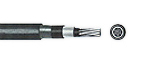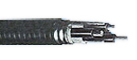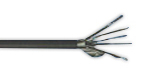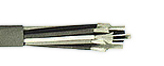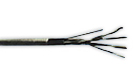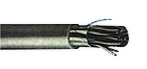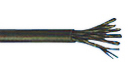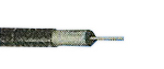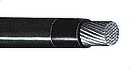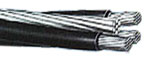
Our inventory covers virtually every electrical and electronic cable application imaginable. We maintain over 15,000 active SKUs, each engineered for performance, consistency, and compliance with UL, CSA, and RoHS standards. From heat-resistant wire to precision coaxial and multi-conductor control cable, we supply the materials that keep manufacturing, communications, and energy systems running 24/7.
At Custom Wire & Cable, every product line is backed by the same principle: deliver the best wire for the job and stand behind it. We combine deep industry knowledge with supply-chain efficiency to help clients meet tight schedules without compromising quality.
Our inventory covers virtually every electrical and electronic cable application imaginable. We maintain over 15,000 active SKUs, each engineered for performance, consistency, and compliance with UL, CSA, and RoHS standards. From heat-resistant wire to precision coaxial and multi-conductor control cable, we supply the materials that keep manufacturing, communications, and energy systems running 24/7.
Browse our full range of wire and cable products by category. Each product is clearly specified to help you quickly identify the right solution for your application.
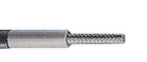
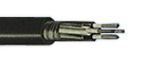
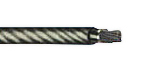
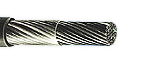
For demanding electrical systems where flexibility and dependable power delivery are critical, 600 to 1000 volt diesel locomotive cable offers a range of conductor sizes to match specific load and installation requirements. Its flexible construction can make routing and termination easier in equipment where larger conductors still need to be maneuvered through confined spaces. When selecting DLO cable, consider current requirements, cable length, installation conditions, and available termination space in addition to voltage rating. Explore our complete selection of mining cable for additional heavy-duty cable options.
Showing 1–9 of 21 results

Array
(
[0] => Applications:
| Item # | Item Name | Size (AWG/MCM) | Strands | Nominal Insulation Thickness (inches) | Nominal O.D. (inches) | Current (Amps) | Nominal Weight (LBS/MFT) | RFQ |
| 9325 | Diesel Locomotive Cable 600 to 1000 Volt | 16 | 19/29 | 0.060 | 0.210 | 26 | 25 | Request a Quote |
| 9326 | Diesel Locomotive Cable 600 to 1000 Volt | 14 | 19/27 | 0.060 | 0.220 | 37 | 40 | Request a Quote |
| 9327 | Diesel Locomotive Cable 600 to 1000 Volt | 12 | 19/25 | 0.060 | 0.240 | 48 | 45 | Request a Quote |
| 9328 | Diesel Locomotive Cable 600 to 1000 Volt | 10 | 27/24 | 0.060 | 0.270 | 63 | 60 | Request a Quote |
| 9329 | Diesel Locomotive Cable 600 to 1000 Volt | 8 | 37/24 | 0.080 | 0.320 | 83 | 90 | Request a Quote |
| 9330 | Diesel Locomotive Cable 600 to 1000 Volt | 6 | 61/24 | 0.080 | 0.380 | 109 | 140 | Request a Quote |
| 9331 | Diesel Locomotive Cable 600 to 1000 Volt | 4 | 105/24 | 0.080 | 0.440 | 145 | 210 | Request a Quote |
| 9332 | Diesel Locomotive Cable 600 to 1000 Volt | 2 | 150/24 | 0.080 | 0.520 | 192 | 270 | Request a Quote |
| 9333 | Diesel Locomotive Cable 600 to 1000 Volt | 1 | 225/24 | 0.095 | 0.610 | 223 | 410 | Request a Quote |
Conductor:
Separator:
Insulation:
Features:
Applications:
Testing:
Approvals:
Choose conductor size based on the required current, cable length, allowable voltage drop, installation conditions, and equipment connection requirements.
The correct size is not determined by amperage alone. Longer cable runs can require a larger conductor to control voltage drop, while ambient temperature, bundling, termination limitations, and other installation conditions may affect allowable current. Compare the current ratings and physical dimensions listed for each cable size, then confirm the final selection against the electrical design and applicable requirements.
Use the voltage rating that meets or exceeds the requirements of the electrical system and the applicable equipment or project specification.
A 600 to 1000 volt DLO cable may be appropriate when the system operates within that voltage range and the cable's construction and approvals meet the installation requirements. A 2000 volt DLO cable should be considered when the system voltage or project specifications require the higher rating. Voltage should be evaluated along with conductor size, insulation system, environmental conditions, and required approvals rather than used as the only selection factor.
Yes. Flexible stranded conductors generally make DLO cable easier to route and handle than less flexible conductor constructions of comparable size.
Stranding can become especially important where cable must pass through equipment, around bends, or into confined connection areas. Greater flexibility can simplify routing and reduce the mechanical difficulty of positioning larger conductors. Installers should still follow the appropriate bend-radius, pulling, and termination requirements for the specific cable and application.
Confirm voltage, ampacity, temperature rating, construction, approvals, installation method, and environmental requirements before making a substitution.
Two flexible cables may appear similar but can carry different listings, insulation systems, voltage ratings, or application limitations. Before replacing another cable type with DLO, verify that the selected product meets the electrical and mechanical requirements of the installation as well as any governing equipment specifications, industry standards, or code requirements.
Outside diameter and weight affect routing space, handling, supports, terminations, and the overall practicality of installing the cable.
As conductor size increases, the finished cable generally becomes larger and heavier. Those changes can affect conduit or raceway capacity, equipment entry points, pulling requirements, cable support, and available termination space. Reviewing OD and weight alongside electrical requirements can help prevent selecting a cable that meets the load requirements but creates installation problems in the field.
Interested in cooperation or have questions? Just fill out the form and we will call you back. Or you can contact us via: info@gmail.com