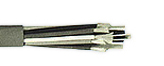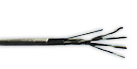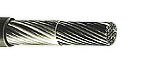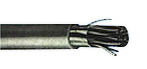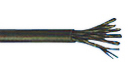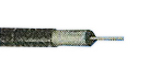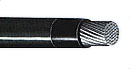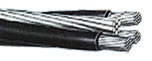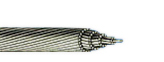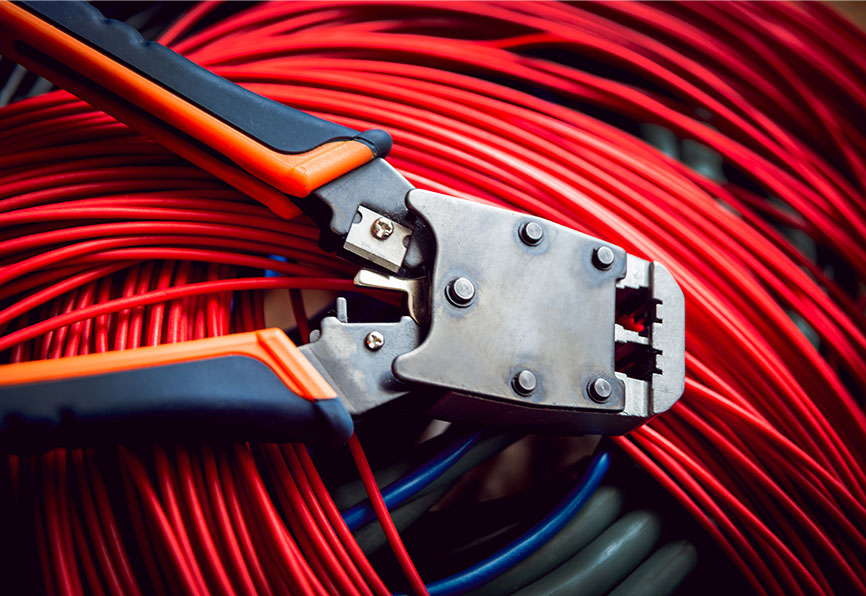
Our inventory covers virtually every electrical and electronic cable application imaginable. We maintain over 15,000 active SKUs, each engineered for performance, consistency, and compliance with UL, CSA, and RoHS standards. From heat-resistant wire to precision coaxial and multi-conductor control cable, we supply the materials that keep manufacturing, communications, and energy systems running 24/7.
At Custom Wire & Cable, every product line is backed by the same principle: deliver the best wire for the job and stand behind it. We combine deep industry knowledge with supply-chain efficiency to help clients meet tight schedules without compromising quality.
Our inventory covers virtually every electrical and electronic cable application imaginable. We maintain over 15,000 active SKUs, each engineered for performance, consistency, and compliance with UL, CSA, and RoHS standards. From heat-resistant wire to precision coaxial and multi-conductor control cable, we supply the materials that keep manufacturing, communications, and energy systems running 24/7.
Browse our full range of wire and cable products by category. Each product is clearly specified to help you quickly identify the right solution for your application.
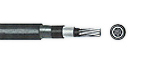
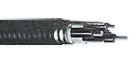
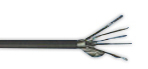
Custom Cable Corp. supplies industrial power cable for equipment wiring, power distribution, motors, busways, cable trays, raceways, conduits, direct burial, and demanding commercial or industrial applications. Browse Type TC, THHN, XHHW, EPR-CPE, XLP-CPE, EPR-HYP, VFD, LSZH, bus drop, shielded, unshielded, and multi-conductor power cable options for 600V power and control systems.
Showing 46–54 of 197 results
Power cable is used to carry electrical power to equipment, motors, panels, machinery, busways, power distribution systems, and industrial electrical installations. It may be used in commercial buildings, manufacturing plants, utility environments, construction sites, energy facilities, and other demanding applications.
The right power cable depends on the voltage rating, conductor count, insulation type, jacket material, installation method, and whether the cable will be used indoors, outdoors, in conduit, in cable trays, in raceways, or for direct burial.
Power cable is available in many constructions depending on the application. Common options include Type TC power cable, THHN power cable, XHHW power cable, EPR-CPE power cable, XLP-CPE power cable, EPR-HYP power cable, VFD power cable, LSZH cable, bus drop cable, and multi-conductor power cable.
Some power cables are designed for cable trays, raceways, conduits, wet or dry locations, direct burial, motors, power devices, or industrial equipment connections.
Type TC power cable is tray cable used for power and control applications in approved installations. It is commonly used in cable trays, raceways, conduits, ducts, troughs, wireways, and industrial equipment systems.
Type TC power cable may be available with different insulation materials, jacket materials, conductor counts, grounding options, voltage ratings, and temperature ratings. The correct cable should match the electrical design and installation requirements.
VFD power cable is used with variable frequency drives and motors. It is commonly selected for industrial systems where the cable needs to support reliable power delivery between the drive and motor while helping manage electrical noise, grounding, and demanding equipment conditions.
VFD cable is often used in manufacturing, automation, pumps, fans, conveyors, and other motor-driven systems.
THHN, XHHW, EPR, and XLP refer to different insulation or cable construction types used in power cable applications. THHN and XHHW are common building and power wire insulation types. EPR is a rubber insulation often used where flexibility, moisture resistance, and demanding service conditions matter. XLP, also called XLPE, is cross-linked polyethylene insulation commonly used for durable electrical performance.
The best choice depends on the voltage rating, environment, flexibility needs, temperature rating, wet or dry location requirements, and installation method.
To choose the right power cable, start with the application and electrical requirements. Confirm the voltage rating, conductor size, conductor count, insulation type, jacket material, grounding requirement, temperature rating, and installation environment.
It also helps to know whether the cable will be used for motors, equipment wiring, busways, cable trays, direct burial, conduit, raceways, wet locations, dry locations, VFD systems, or general power distribution.



Interested in cooperation or have questions? Just fill out the form and we will call you back. Or you can contact us via: info@gmail.com