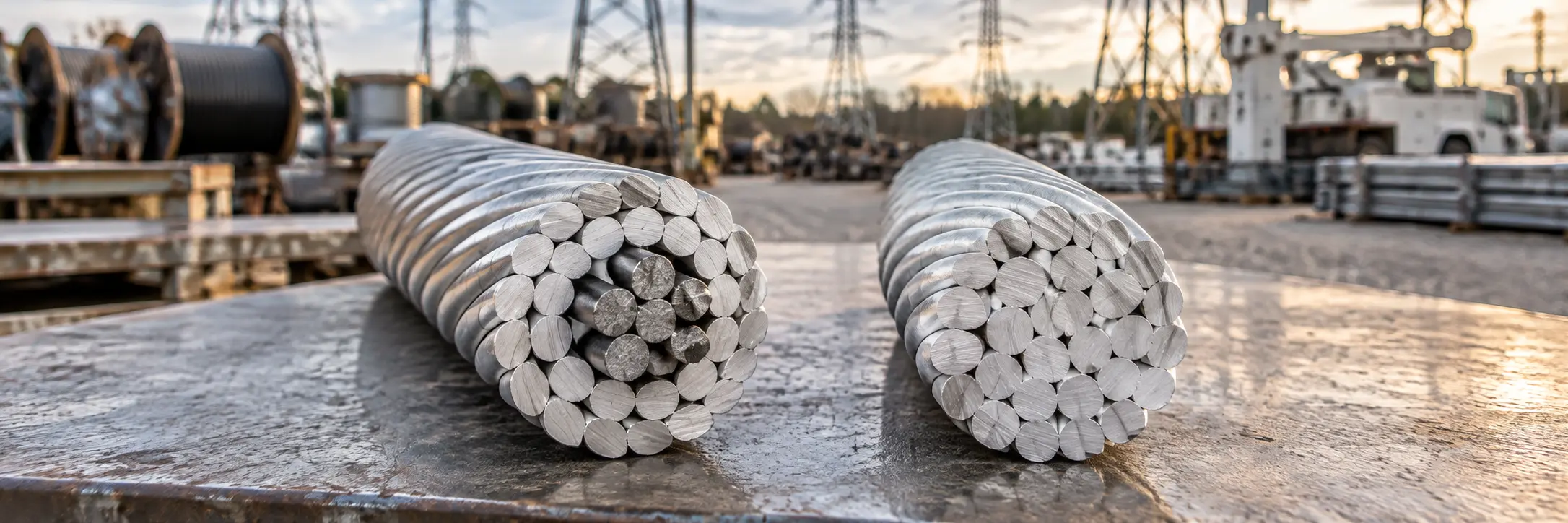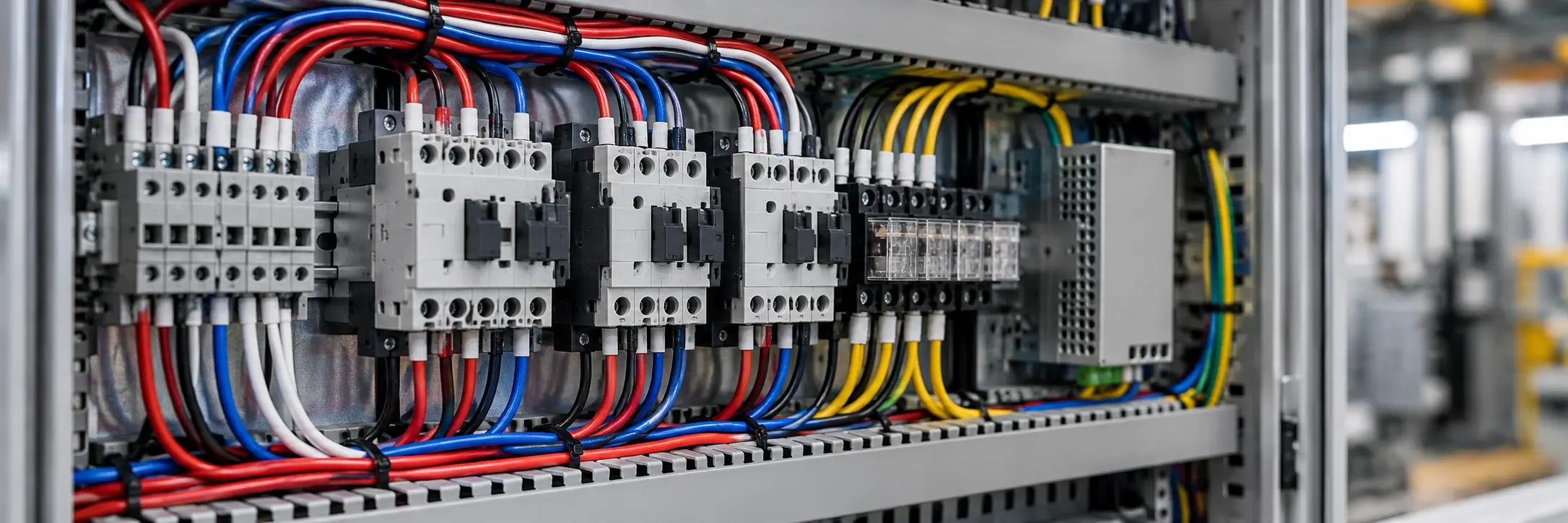
Two hook-up wires can have the same conductor size and still behave very differently once they are installed in equipment. One of the biggest reasons is the material surrounding the conductor.
PVC, TFE and cross-linked polyethylene, commonly called XLP or XLPE, each bring different characteristics to internal wiring. Choosing among them is not simply a matter of finding the material with the highest temperature rating. The wire has to make sense for the equipment, operating conditions, electrical requirements and applicable specifications.
For engineers and buyers comparing hook-up wire, understanding what each insulation family does well can make it much easier to narrow the available choices.
Why Does Hook-Up Wire Insulation Matter?
Insulation separates the conductor from surrounding components and other conductors, but its job goes well beyond electrical isolation.
Depending on the application, insulation may need to tolerate heat from nearby components, exposure to chemicals or fluids, repeated handling during equipment assembly and demanding operating conditions. The insulation also influences the finished dimensions and physical characteristics of the wire.
This is why choosing hook-up wire by AWG alone can lead to the wrong product. The conductor may be the correct size while the insulation is poorly matched to the environment in which the wire will operate. PVC, TFE and XLP give designers several ways to address those requirements.
PVC Hook-Up Wire: A Practical Choice for General Equipment Wiring
PVC is widely used for electrical and electronic wiring because it can provide a useful balance of electrical performance, durability and cost.
PVC hook-up wire can be a good fit for internal wiring in equipment where the operating environment does not require a more specialized high-temperature insulation. Depending on the exact construction, it may be used in electrical equipment, electronics, panels, meters, appliances, instrumentation and control systems. It is important, however, not to treat every PVC-insulated wire as the same product.
One option is irradiated PVC hook-up wire, which uses a modified PVC construction that can provide advantages in certain equipment designs.
We covered that distinction in more detail in our article about when to use irradiated PVC hook-up wire instead of standard PVC hook-up wire.
For the broader insulation decision, PVC is worth considering when the application’s electrical, temperature and environmental requirements fall comfortably within the ratings of the specified PVC wire.
When Does TFE Hook-Up Wire Make More Sense?
There are applications where the environment around the wire becomes much more demanding. Heat and chemical exposure can quickly become major selection factors.
TFE is a fluoropolymer insulation known for strong performance in high-temperature and chemically demanding environments. It also offers strong electrical insulating characteristics, which is one reason fluoropolymer-insulated wire is found in specialized electrical, electronic, military and industrial applications. TFE hook-up wire is available in MIL-W-16878 Type E and Type EE constructions for applications that call for those specifications.
TFE may deserve consideration when a project involves conditions that push beyond the capabilities of a more conventional insulation. Examples can include equipment that operates at elevated temperatures or installations where chemical resistance is an important part of the specification.
That does not mean TFE should automatically replace PVC whenever higher performance sounds desirable. A specialized material may add capabilities that the equipment simply does not require. The correct decision is the wire that satisfies the complete specification, not necessarily the wire with the most extreme individual property.
Where Does XLP Hook-Up Wire Fit?
XLP is polyethylene that has been cross-linked to change its physical and thermal characteristics. Cross-linking helps the material retain its properties under conditions that would be more demanding for ordinary thermoplastic polyethylene.
In hook-up wire applications, XLP can provide a useful combination of electrical, thermal and mechanical performance. Available XLP constructions include irradiated XLP hook-up wire and XLP appliance, transformer and motor lead wire.
That makes XLP particularly relevant when the application involves equipment such as appliances, motors, transformers, coils or other assemblies where elevated operating temperatures and physical durability need to be considered together.
XLP should not be confused with irradiated PVC. Both materials can undergo cross-linking, but the underlying insulation materials are different and should not be considered interchangeable simply because both descriptions contain terms such as “cross-linked” or “irradiated.”
PVC vs. TFE vs. XLP at a Glance
There is no universal ranking in which one insulation is always better than the others.
A more useful way to think about the three materials is by the kinds of requirements that tend to move the decision in their direction.
| Insulation | Often Considered When |
| PVC | General internal equipment wiring needs a practical combination of electrical performance and durability |
| TFE | Elevated temperature, chemical exposure or a specified MIL construction calls for a fluoropolymer insulation |
| XLP | The application benefits from cross-linked insulation with strong thermal, electrical and mechanical characteristics |
These are starting points rather than substitution rules. The actual wire specification still controls the decision.
Start With the Temperature Requirement
Temperature is one of the easiest ways to narrow the field. The first step is to determine the temperature the wire may experience in service. This should take into account more than the ambient temperature around the equipment. Heat generated by motors, transformers, power supplies or other nearby components can create a very different environment inside an enclosure. The required wire temperature rating can eliminate unsuitable products quickly.
It is also important to compare actual wire constructions rather than relying on assumptions about the insulation family. Different products using similar insulation terminology can carry different temperature ratings.
Think About What the Wire May Be Exposed To
Temperature is only part of the environment. Industrial equipment may expose internal wiring to oils, cleaning agents, chemicals or other substances. In applications where chemical exposure is likely, the resistance of the insulation to those particular substances becomes part of the selection process.
This is one area where TFE can become attractive because fluoropolymer insulation is known for broad chemical resistance.
The key word, however, is particular. A general statement that a material is chemically resistant should not replace checking its suitability for the substance and conditions involved in the application.
Consider the Mechanical Demands on the Wire
Hook-up wire often has to travel around components, through crowded enclosures and into connection points that leave little room for error. The insulation therefore has to work as part of the complete wire construction. Its thickness, physical properties and finished outside diameter can affect how easily the wire can be routed through the equipment.
Applications involving motors, machinery or other demanding equipment may also introduce vibration and mechanical stresses that should be considered when specifying the wire.
This is another reason insulation cannot be evaluated independently from conductor construction, strand count and overall wire dimensions.
Do Not Choose the Insulation Before Checking the Standard
A designer may decide that TFE, XLP or PVC appears ideal for an application and still end up with the wrong wire. Why? Because the project may call for a specific UL style, CSA requirement, military specification or other defined construction.
The Hook-Up Wire category includes MIL-W-16878 products, UL hook-up wire styles and other constructions intended for particular applications and ratings.
If a drawing or specification calls for one of those standards, the required specification becomes a primary selection criterion. Choosing a similar insulation material does not by itself establish equivalency.
A Better Way to Choose Hook-Up Wire
Instead of starting with “Do I need PVC, TFE or XLP?” start with the conditions the wire has to satisfy.
Identify:
- Required conductor size
- Solid or stranded construction
- Voltage requirement
- Expected operating temperature
- Environmental exposure
- Physical routing requirements
- Applicable UL, CSA, MIL or other specifications
- Any application-specific requirements
Once those are clear, the insulation choice usually becomes much easier. A relatively ordinary piece of equipment may be well served by a PVC construction. A demanding high-temperature or chemically exposed application may point toward TFE. Another application involving elevated heat and equipment wiring may make an XLP construction the better match. The important point is that the material should follow the application requirements rather than the other way around.
Finding the Right Hook-Up Wire for the Application
Hook-up wire may look simple compared with a large multi-conductor cable, but small differences in construction can matter inside electrical and electronic equipment.
PVC, TFE and XLP each have useful roles. The right choice depends on how the equipment operates, where the wire will be installed and what specifications must be met.
Custom Cable Corp. supplies a broad range of hook-up wire for electrical, electronic, industrial and specialty applications. When the required construction is not immediately clear, comparing the complete application requirements can help narrow the available products before requesting a quote.
Frequently Asked Questions About Hook-Up Wire Insulation
Yes, provided each wire is correctly specified for the circuit and application in which it is used.
A single piece of equipment does not necessarily require one insulation material throughout. Different sections can experience different temperatures, electrical conditions or environmental exposures. One circuit might use PVC hook-up wire while another uses XLP or TFE. Each wire still needs to satisfy the ratings, specifications and design requirements for its particular location in the equipment.
It can. The complete wire dimensions and construction should be checked against the termination being used.
Connectors and terminals are generally selected around characteristics such as conductor size, strand construction and finished wire dimensions. Changing to a different insulated wire can alter the outside diameter or physical behavior of the wire even when the AWG size remains the same. The wire and termination should therefore be evaluated as a complete connection rather than assuming that identical conductor gauge guarantees identical fit.
Yes. Wire-support components should be suitable for the dimensions and materials of the wire they contact.
Clamps, ties, sleeving and other routing hardware can place pressure on insulation or hold wiring close to heat-producing components. The finished wire diameter, expected temperature and materials used in the assembly should all be considered. A support method that works well with one wire construction should not automatically be assumed suitable for every insulation type.
No. TFE insulation alone does not establish that a wire is approved for a particular outdoor or wet-location installation.
Although TFE has useful moisture, weathering and chemical characteristics, installation suitability depends on the complete wire construction and its applicable ratings or approvals. If a project requires outdoor, wet-location or another specific environmental rating, that requirement should be verified for the exact product rather than inferred from the insulation material alone.
A change should be reviewed against the original electrical, mechanical and compliance requirements before it is accepted.
Changing the insulation may also change temperature capability, finished diameter, physical properties, voltage rating or applicable approvals. For equipment built to a defined specification or certification, a material change may require engineering review or additional compliance consideration. A new wire should therefore be evaluated against the complete original specification rather than approved solely because its conductor size matches.