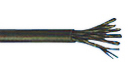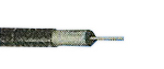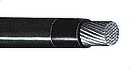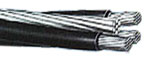
Our inventory covers virtually every electrical and electronic cable application imaginable. We maintain over 15,000 active SKUs, each engineered for performance, consistency, and compliance with UL, CSA, and RoHS standards. From heat-resistant wire to precision coaxial and multi-conductor control cable, we supply the materials that keep manufacturing, communications, and energy systems running 24/7.
At Custom Wire & Cable, every product line is backed by the same principle: deliver the best wire for the job and stand behind it. We combine deep industry knowledge with supply-chain efficiency to help clients meet tight schedules without compromising quality.
Our inventory covers virtually every electrical and electronic cable application imaginable. We maintain over 15,000 active SKUs, each engineered for performance, consistency, and compliance with UL, CSA, and RoHS standards. From heat-resistant wire to precision coaxial and multi-conductor control cable, we supply the materials that keep manufacturing, communications, and energy systems running 24/7.
Browse our full range of wire and cable products by category. Each product is clearly specified to help you quickly identify the right solution for your application.
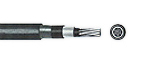
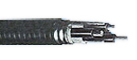
Selecting mine power feeder cable involves more than matching the cable’s voltage rating to the electrical system. Conductor size, current requirements, distribution layout, grounding configuration, cable dimensions, and installation method should all be considered when specifying the appropriate cable. With options for 5kV, 8kV, and 15kV systems, the cable can be matched to the requirements of the mine’s power distribution network and connected load centers. Explore our complete selection of mining cable for additional mine power and heavy-duty cable options.
Showing 10–18 of 31 results

Array
(
[0] => Applications:
| Item # | Item Name | Size (AWG/MCM) | Strands | Nominal Insulation Thickness (inches) | Nominal Jacket Thickness (inches) | Ground Wire (2)(AWG/MCM) Ground | Ground Check(AWG) | Nominal O.D. (inches) | Current (Amps) | Nominal Weight (LBS/MFT) | RFQ |
| 25510 | Mine Power Feeder Cable- XLP-PVC - 5000V, 8000V and 15000V | 350 | 37 | 0.090 | 0.140 | 2/0 | 8 | 2.350 | 435 | 6000 | Request a Quote |
| 25511 | Mine Power Feeder Cable- XLP-PVC - 5000V, 8000V and 15000V | 500 | 37 | 0.090 | 0.170 | 4/0 | 8 | 2.640 | 536 | 8100 | Request a Quote |
| 25520 | Mine Power Feeder Cable- XLP-PVC - 5000V, 8000V and 15000V | 6 | 7 | 0.115 | 0.110 | 10 | 10 | 1.330 | 93 | 1200 | Request a Quote |
| 25521 | Mine Power Feeder Cable- XLP-PVC - 5000V, 8000V and 15000V | 4 | 7 | 0.115 | 0.110 | 8 | 8 | 1.430 | 122 | 1450 | Request a Quote |
| 25522 | Mine Power Feeder Cable- XLP-PVC - 5000V, 8000V and 15000V | 2 | 7 | 0.115 | 0.110 | 6 | 8 | 1.550 | 159 | 1800 | Request a Quote |
| 25523 | Mine Power Feeder Cable- XLP-PVC - 5000V, 8000V and 15000V | 1 | 19 | 0.115 | 0.110 | 5 | 8 | 1.650 | 184 | 2300 | Request a Quote |
| 25524 | Mine Power Feeder Cable- XLP-PVC - 5000V, 8000V and 15000V | 1/0 | 19 | 0.115 | 0.110 | 4 | 8 | 1.750 | 211 | 2700 | Request a Quote |
| 25525 | Mine Power Feeder Cable- XLP-PVC - 5000V, 8000V and 15000V | 2/0 | 19 | 0.115 | 0.140 | 3 | 8 | 1.880 | 243 | 3200 | Request a Quote |
| 25526 | Mine Power Feeder Cable- XLP-PVC - 5000V, 8000V and 15000V | 3/0 | 19 | 0.115 | 0.140 | 2 | 8 | 2.000 | 279 | 3700 | Request a Quote |
Construction
Conductors:
Conductor Shielding:
Insulation:
Insulation Shield:
Ground Wires:
Ground Check Conductor:
Conductor Identification:
Assembly:
Jacket:
Features:
Applications:
Standards:
Select the voltage class that meets the operating voltage, insulation requirements, and specifications of the mine power distribution system.
The correct choice should be based on the electrical system design rather than simply selecting the highest available voltage rating. System voltage, grounding method, insulation level, connected equipment, cable length, and applicable mine electrical requirements can all influence the specification. The conductor size must then be selected separately to accommodate the required current and other installation conditions.
The ground check conductor can be used with compatible monitoring equipment to verify continuity of the equipment grounding circuit.
Mine electrical systems often incorporate ground-monitoring systems designed to detect a loss of grounding continuity. The dedicated ground check conductor provides the monitoring circuit with a separate path that can be used to help verify that the grounding system remains intact. Its purpose is different from that of the primary grounding conductors that carry fault current.
The ground wires provide the equipment grounding path, while the ground check conductor supports continuous monitoring of that grounding system.
Although the conductors are contained within the same cable assembly, they serve separate electrical functions. The grounding conductors provide a low-impedance path for fault current, while the insulated ground check conductor can be incorporated into a monitoring circuit designed to detect an interruption in grounding continuity. This distinction is particularly important in mine power distribution systems where ground integrity may be continuously monitored.
Mine power feeder cable is generally intended for fixed or semi-portable distribution, while SHD-GC cable is designed for equipment applications that require substantially more flexing and mechanical movement.
Mine power feeder cable is well suited to distributing power through the mine infrastructure to load centers and other distribution points. SHD-GC cable uses a construction intended for demanding portable and mobile equipment such as shovels, draglines, and similar machinery where repeated flexing, movement, impact, and mechanical stress are greater concerns. The amount of cable movement expected in service is therefore an important factor when choosing between the two types.
Long mine feeder runs should be evaluated for ampacity, voltage drop, system voltage, load characteristics, and installation conditions before conductor size is selected.
A conductor may have sufficient ampacity for the connected load but still produce excessive voltage drop over a long distribution run. Cable length, operating current, starting characteristics of connected equipment, conductor resistance, ambient conditions, and the installation method can all affect performance. Physical factors such as cable diameter and weight should also be considered because larger mine feeder cables can place greater demands on handling, supports, and installation equipment.
Interested in cooperation or have questions? Just fill out the form and we will call you back. Or you can contact us via: info@gmail.com